Repo-Aware AI Code Review vs. Diff-Based Review
Most AI code reviewers only read the pull request. The ones that read the whole repo catch what a diff alone can't, like broken conventions, duplicate abstractions, and architectural drift.

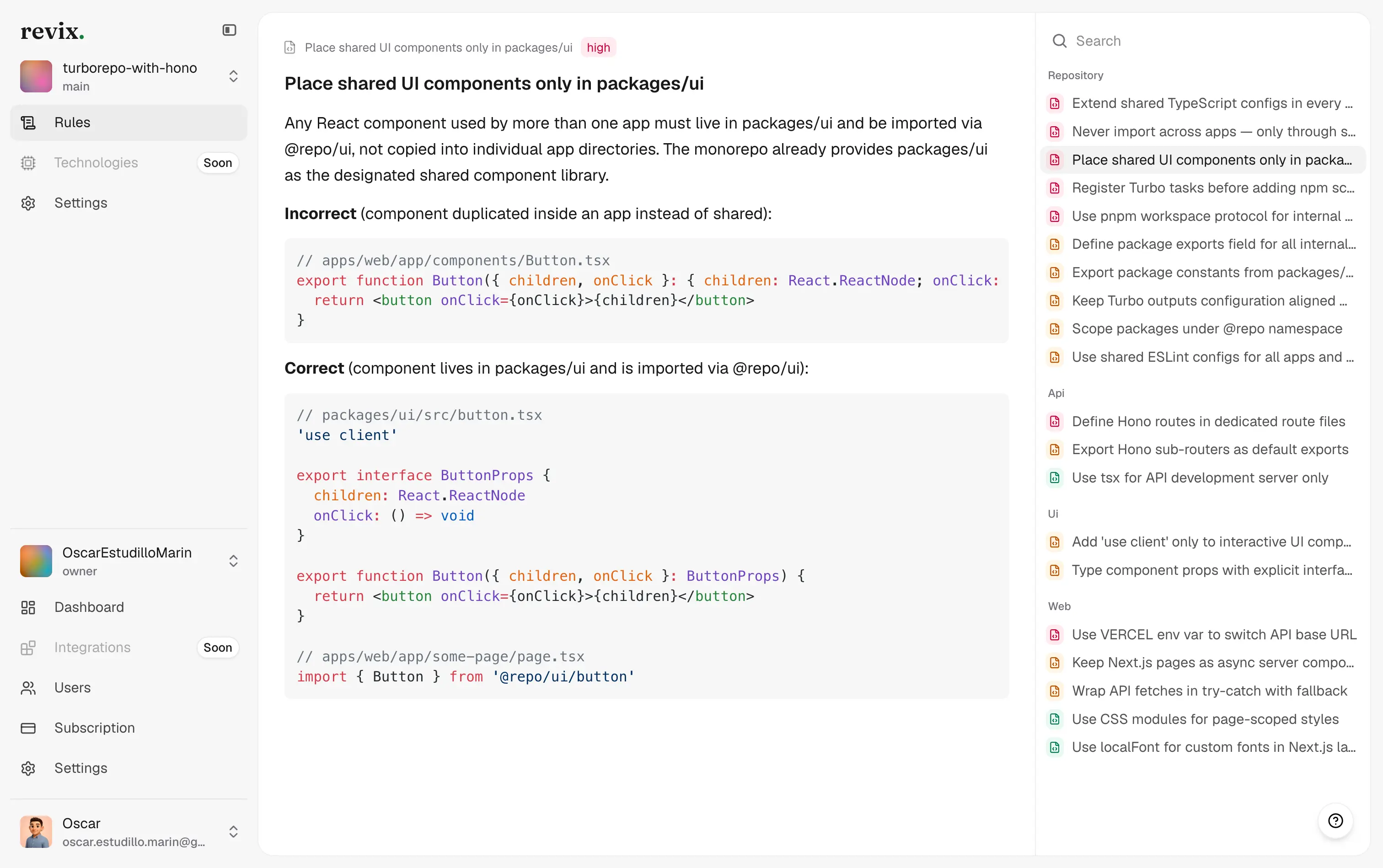
Most AI code reviewers can only see your pull request. The ones worth using can see your codebase.
That sounds like a small difference. It's usually the whole difference between approving code that merely compiles and catching the change that turns into an incident three sprints later.
The line 41 problem
Picture a pull request that adds a search endpoint. It scans every entry in state.todos on each request, filters by title, and returns the matches. Reasonable code, nothing obviously wrong.
The problem is what it skips. Elsewhere in the same repo, every other filtered read, list_todos and get_todos_by_owner, goes through a shared prefix index backed by a BTreeMap, keeping those lookups at O(log n). This handler bypasses it and does a full O(n) scan instead.
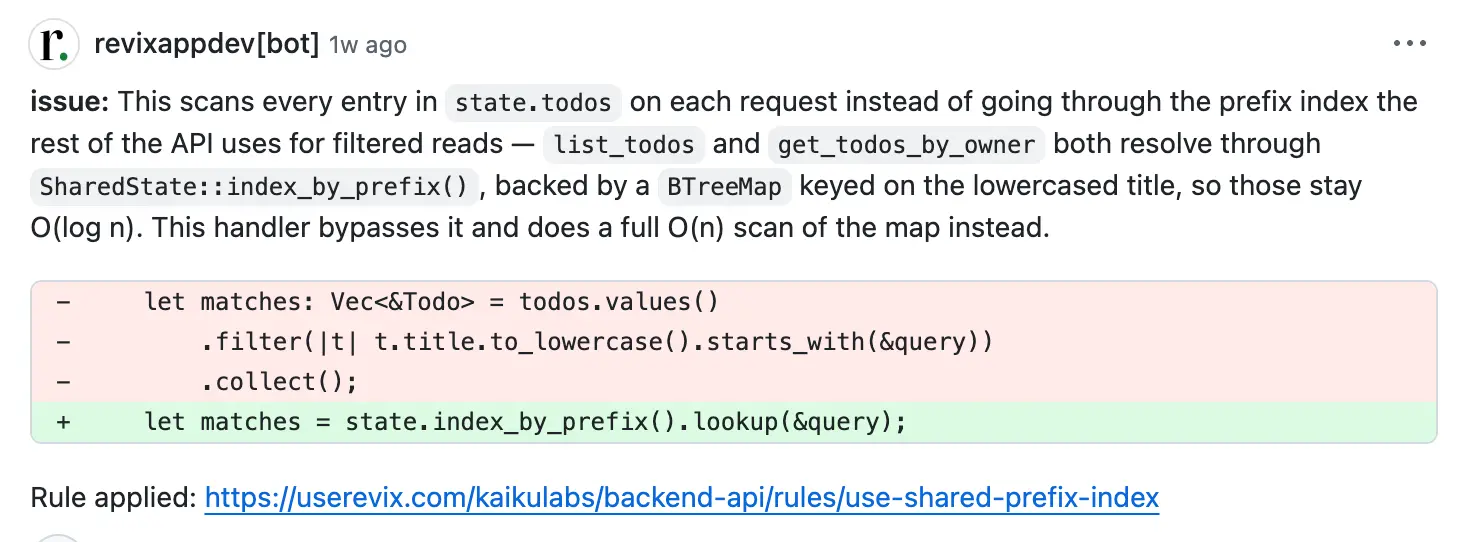
A reviewer that only reads the diff has no way to catch that. Not because it's inaccurate. Because it never saw the other files where the pattern actually lives. We call this the line 41 problem: the issue isn't in the changed lines, it's only visible next to everything around them.
What a diff-based reviewer sees
Diff-based review looks at the files and lines a pull request touches, and checks the patch for the things you'd expect: bugs, syntax issues, code smells, readability, security problems visible in the change, general best practices.
For a lot of pull requests, that's genuinely enough. It's fast, cheap to run, and needs no setup beyond connecting a repo. Its limit is what it can see: anything outside the diff doesn't exist to it.
What a repo-aware reviewer sees
A repo-aware reviewer reads the change against everything the diff doesn't show: the shared helpers, the internal frameworks, the conventions the team has settled into, the architectural decisions already made elsewhere in the codebase.
That context is what lets it ask the question that actually matters:
Does this follow how the rest of the repo works, or did it just get merged before anyone caught it?
Whether the SQL is valid rarely decides if a pull request causes problems. Whether it fits the system it's joining usually does.
Where it shows up in practice
Take a repo where every authenticated endpoint runs through a shared authorization middleware. A new endpoint ships with its own inline auth check instead.
Inside the diff, nothing looks wrong. The check works, tests pass, the endpoint is secure. Read against the rest of the repo, it's a second authentication path the team now has to maintain alongside the first. Six months in, nobody remembers why two exist, and the next person copies whichever one they find first.
A repo-aware reviewer flags this on open. A diff-only reviewer has no way to know the shared middleware exists at all.
The gap in plain terms
Both approaches read the pull request. The difference is what else they're reading alongside it:
- A diff-based reviewer checks the patch. A repo-aware reviewer checks the patch against the repo's conventions.
- A diff-based reviewer can flag an obvious duplicate inside the same file. A repo-aware reviewer catches the same logic reimplemented three services over.
- A diff-based reviewer has no concept of "the way we do this here." A repo-aware reviewer treats that as the whole point of the review.
Neither one is reading the code more carefully. One of them is just reading more of it.
Diff-based review still earns its place
None of this makes diff-based review obsolete. For small pull requests, docs updates, quick bug fixes, and fast first-pass feedback, it's the right tool, and adding repo-wide context to a five-line typo fix is wasted effort.
The limitation isn't quality. It's visibility. A diff-based reviewer is only as good as what's inside the diff, and plenty of real problems live just outside it.
Why we built Revix AI this way
This is the bet behind Revix AI: a reviewer that learns your repo's conventions from the whole codebase, not just from the PRs it happens to see, and keeps that understanding current as the codebase changes.
We've written up what that looks like in practice, including the actual signal rate across our own review data: What 200 Pull Requests Taught Us About AI Code Review.
As teams and codebases grow, the questions engineering leads actually care about stop being "does this compile" and start being "does this belong here." That's a repo question, not a diff question, and it needs a reviewer that reads the whole repo to answer it.
See what repo-aware review catches on your next PR: userevix.com. Every team starts with a 14 day free trial, no card required.